
'Silent Hill f' Explained: The Three Rituals
Marriage and Suffering in the Otherworld...

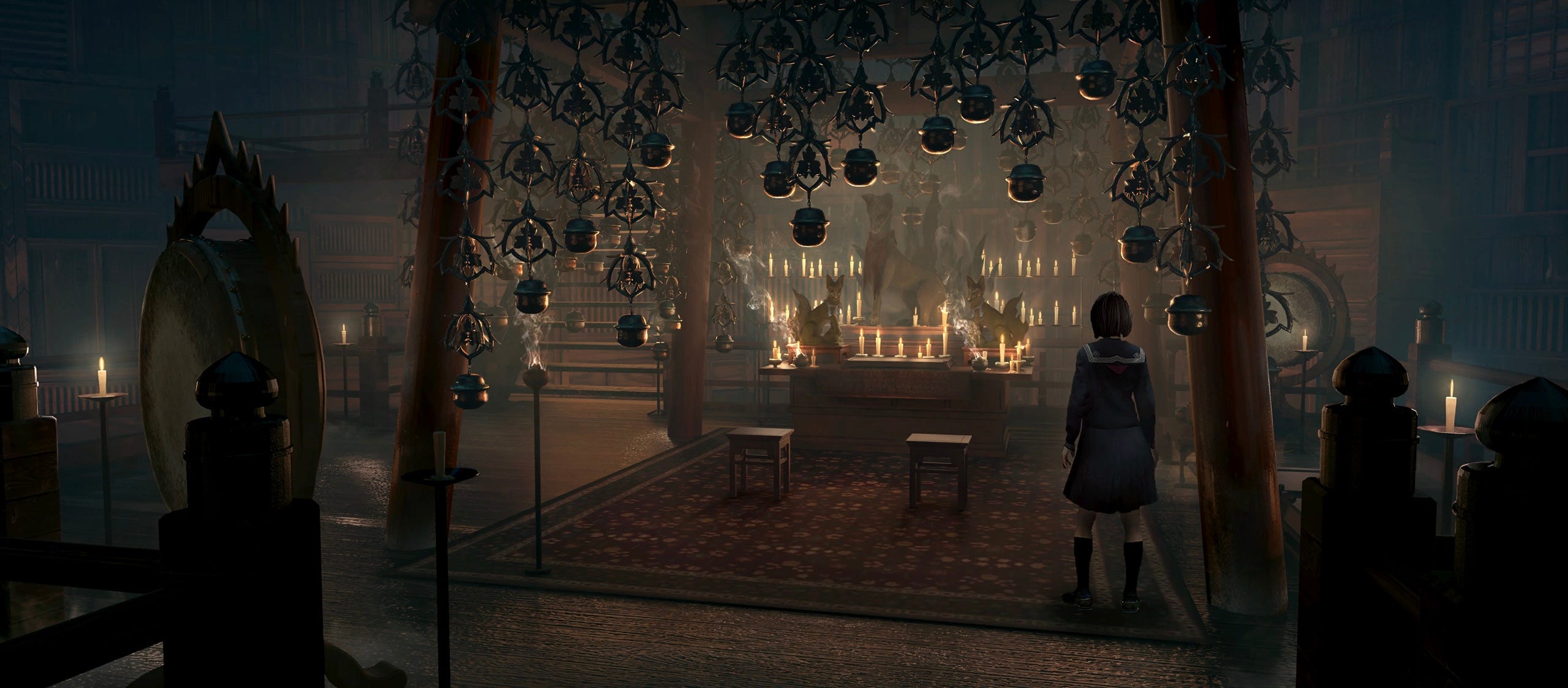
Silent Hill games have always had two separate worlds: the Fog World where the main location is shrouded in fog that feels so thick it’s suffocating.
Back in the original game, developed by Konami’s Team Silent, it was a way to hide the draw distance limitations of the original PlayStation console. But, after that, it became a hallmark of the series. A claustrophobic experience where you never quite knew what was waiting for you in the fog. Throw in the radio and it's static warnings and players were left shaking in fear…
The other part of the games’ plunged the player into the Otherworld; a mostly metallic, rusted version of the existing map with new enemies, different routes and puzzles, along with a terrifying soundtrack and the need to just leave as quickly as possible, to defeat a boss or trigger the change back into the Fog World.
Silent Hill f did something different, it made the majority of the map focus on Ebisugaoka whilst the Otherworld is the self-contained Dark Shrine, a grimy, bloody shadow of a Shinto jinja that appeared to exist in its own space that Hinako could access each time she passed out or fell asleep.
Hinako begins in the outer precints of the shrine and, as the game progressed, so she gained access to new sections, hidden paths, secret areas and slowly surrendered her identity as ‘Shimizu Hinako’ in favour of becoming the bride of the mysterious, but kind, priest of this place, who wears a Fox Mask and possesses mystical powers, and who only wants to love and protect her.
The Cleansing
Fox Mask leads Hinako into the Dark Shrine to a pavilion called a temizuya (手水舎) or chōzuya (手水舎)—a small area where people can wash their hands and mouth as a form of ritual purification. This is usually done with water but when Hinako washes her hands, it feels like she’s putting her hands in lava…
This could be because Hinako thinks she’s impure or because the concept of purification within the Dark Shrine is twisted. Rather than a place of cleanliness, sacredness and purity, it’s a place of pain, suffering and misery.
The First Ritual
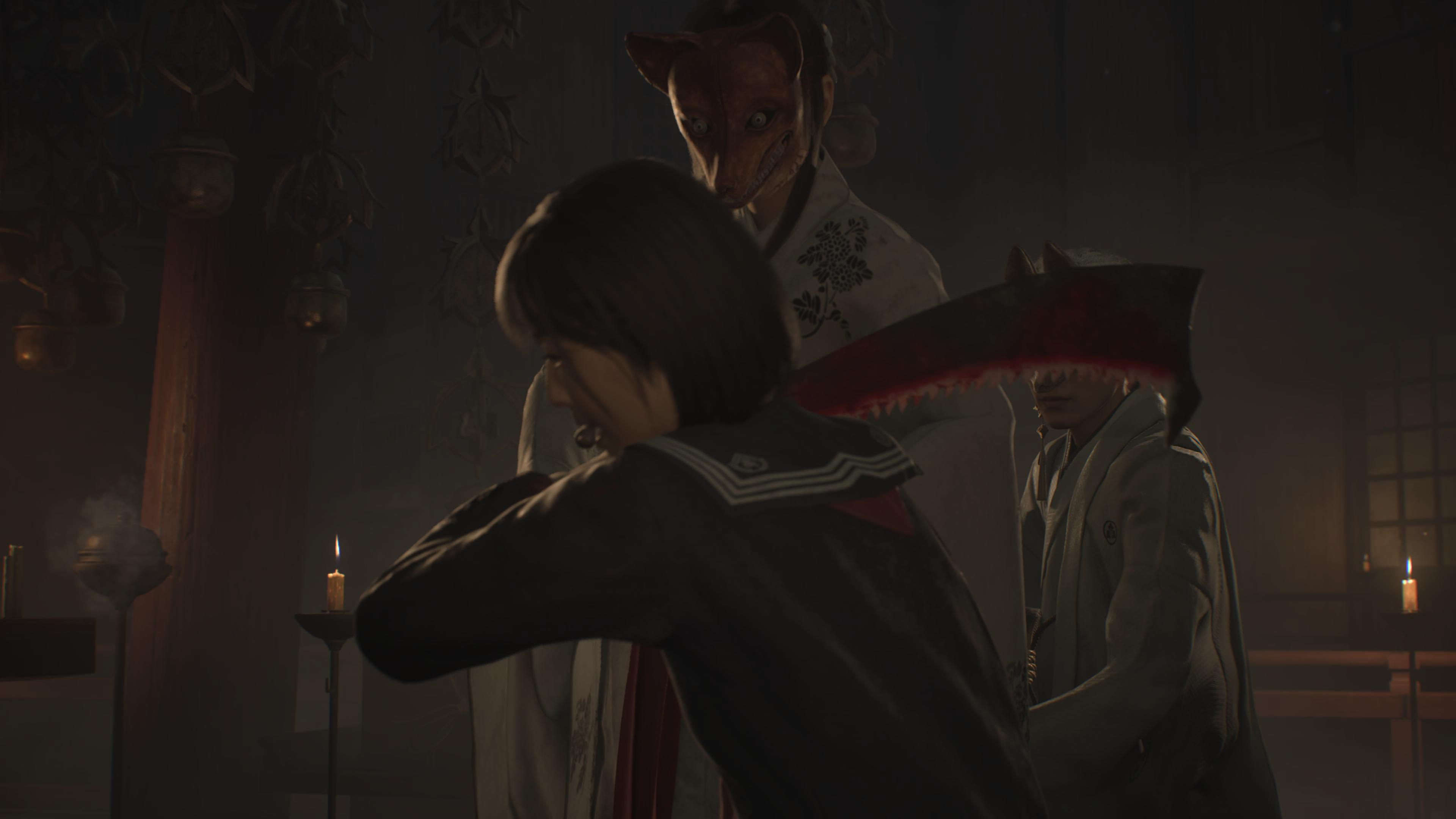
Hinako must saw off her own arm… Yeah. It’s visceral and gross, and just , well, absolutely horrific. Especially when you see how meek and almost drowsy Hinako is, convinced perhaps, this is just a dream. And then, yes, full on body horror. Even more so when the priestesses (shrine maidens wearing stylised fox masks) reveal an oversized Fox arm covered in fur which is then used as a replacement.
Symbolically, this is Hinako’s first step to becoming a part of the Tsuneki family, a clan known for their devotion to Inari as keepers of Tsuneyoshi Jinja, as well as their connection with a mysterious Fox who came to Ebisugaoka to save the town from the Water Dragon and all the natural disasters it was causing.
The Second Ritual
Hinako has the Tsuneki family/shrine crest burned into her back, symbolising her membership in the family. From this, Hinako gains the ability to enter what I can only describe a Super Saiyan-mode, where she can rip and render anything in her path, which is a good job as the enemies (looking at you ) just got an upgrade…
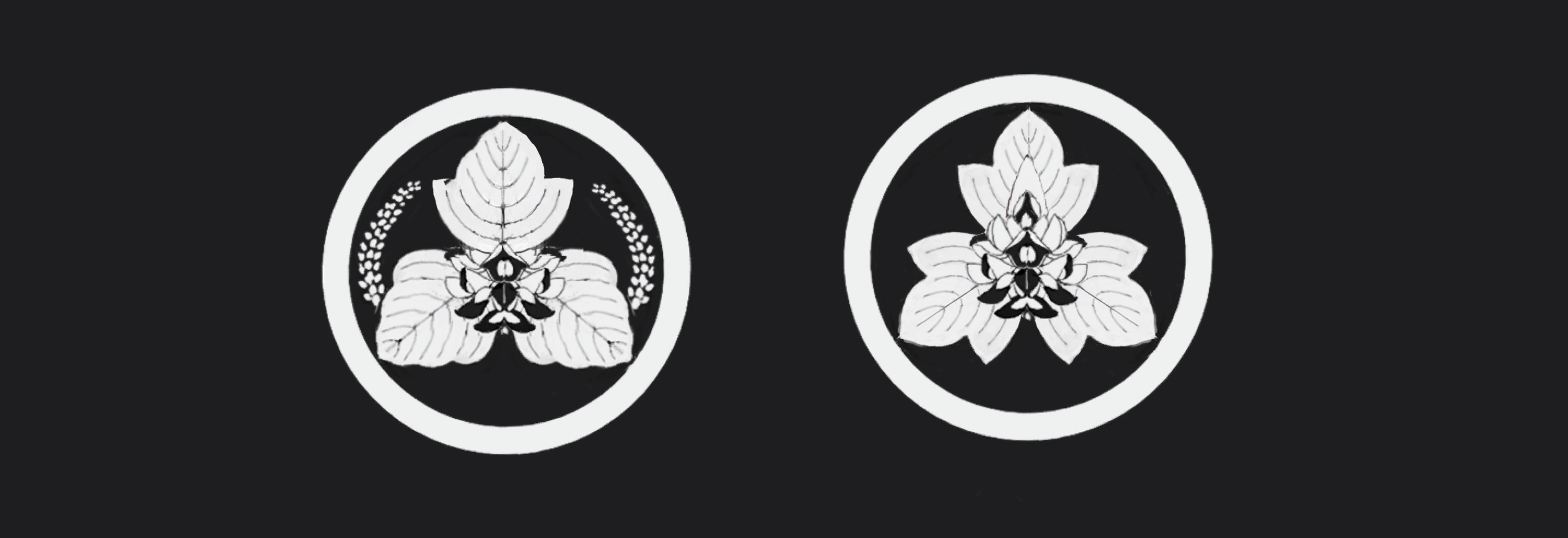
The artbook and the game introduce several variants on the mon, a Japanese crest use to represent families, societies and shogunates. I’m not an expert in this in particular but it looks to be both the clan crest but also a reference to Silent Hill 2 and the Seal of Metatron (which is triangular) but also the Halo of the Sun found in Silent Hill 3 which serves as the sigil of The Order.
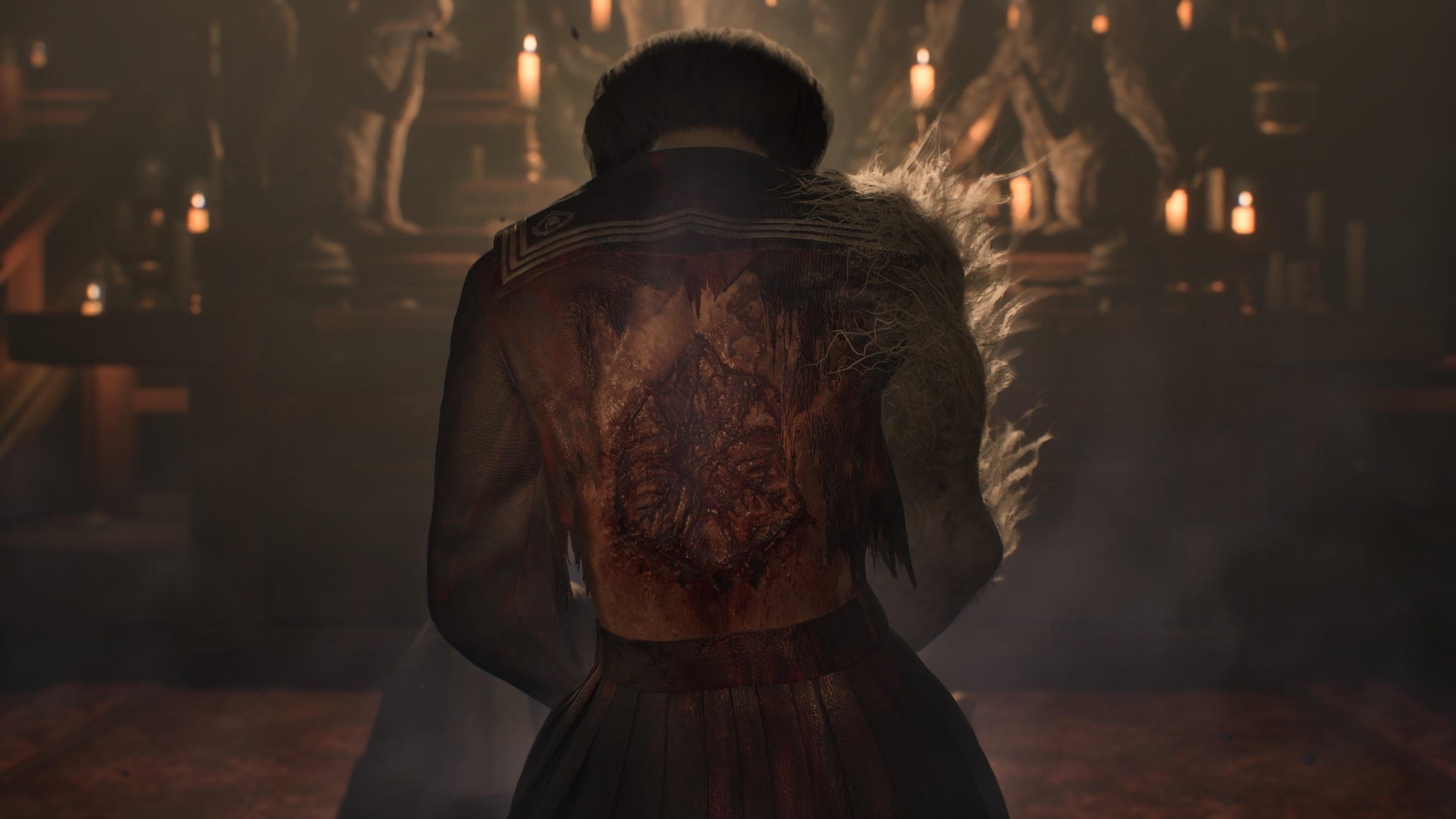
Ritual-wise, this is physical branding. It’s nasty but also serves the under-current of the narrative. Hinako is now tied to both the family but, in the parlance of the time, also a possession of the clan. She’s been bought and paid for. It’s a horrific concept but when you factor in her father’s decision to sell her to the clan in order to pay off his debts, it makes such sense.
The Third Ritual
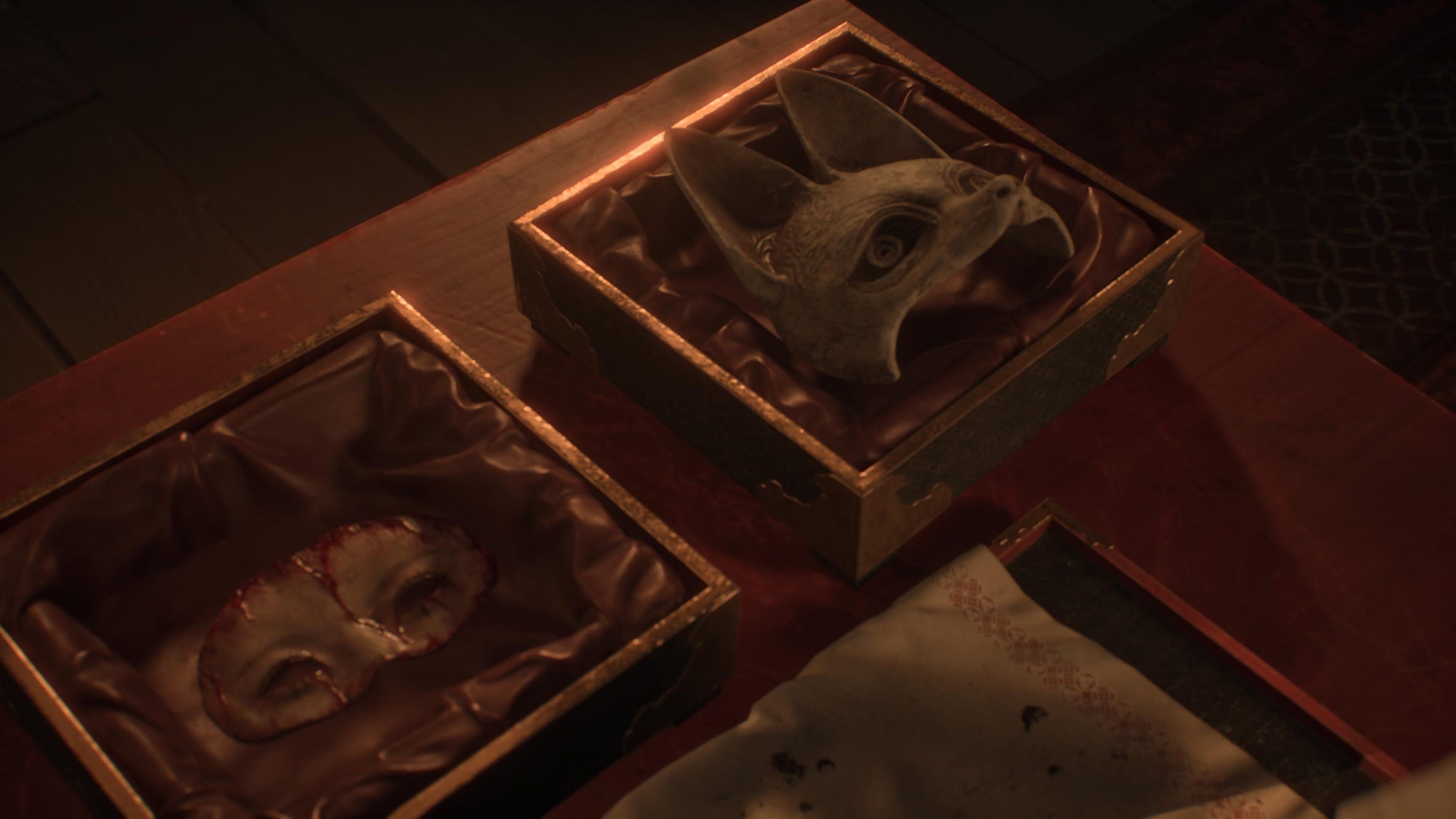
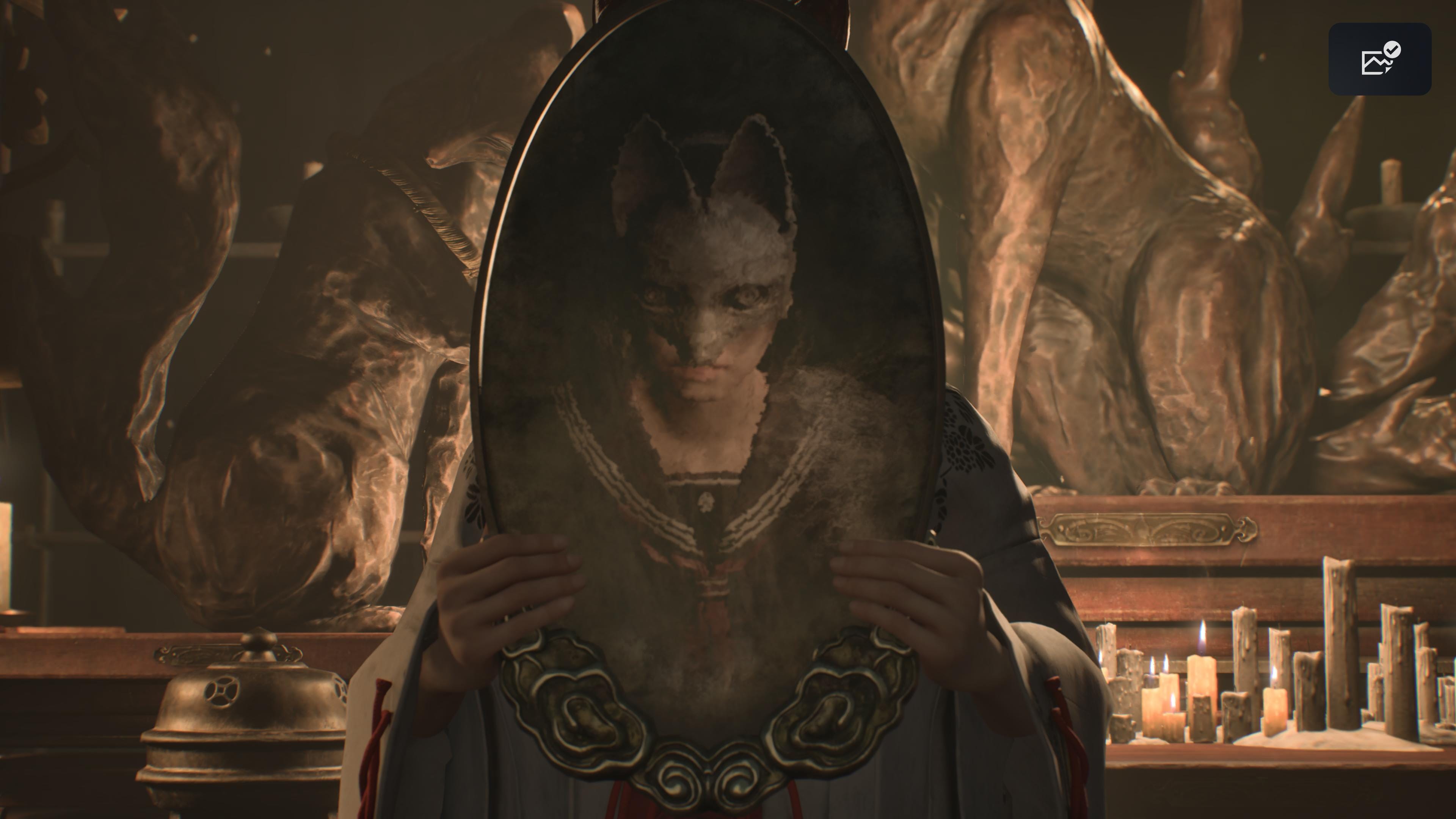
This one is much easier and less violent but still has meaning. The area around Hinako’s eyes is removed and replaced with a wooden fox mask. It’s similar to the ones worn by the priestesses and Fox Mask, however, it’s design is also unique to Hinako, even developing a third eye over time (linking it to her consumption of White Claudia/Kakura-makakura and it’s mind-expanding, divinity-conversing properties).
This is about the final destruction of Hinako’s self, if not her personality. Everything that makes her Hinako is removed. She is left with just the mask, thus making her one with the various unnamed participants lining the halls that the couple walk past just before the boss fight with the Rinko-like boss.
The Wedding Ceremony
Hinako awakens to find Fox Mask offering her bowls of sake to ease her pain. She accepts the bowl, drinks and then he takes a gulp. This is a basic component (三三九度; san-san-kudo) in Shinto wedding rituals, as sake is sacred. It’s used in purification and also as an offering to kami. Bride and groom traditionally share three bowls, but this ritual can also be found in other areas of Japanese life, such as geisha/geiko customs for example.
Fox Mask/Kotoyuki and Hinako then approach the altar and offer shide-wrapped branches called tamagushi (玉串) and is an important part of the ceremony. These evergreen branches, often sasaki leaves, are blessed and symbolise the couple’s gratitude to okamisama. They’re also carried, rotated and presented in a certain fashion to the altar (I’ve actually done this particular rite, though it wasn’t at a wedding…)
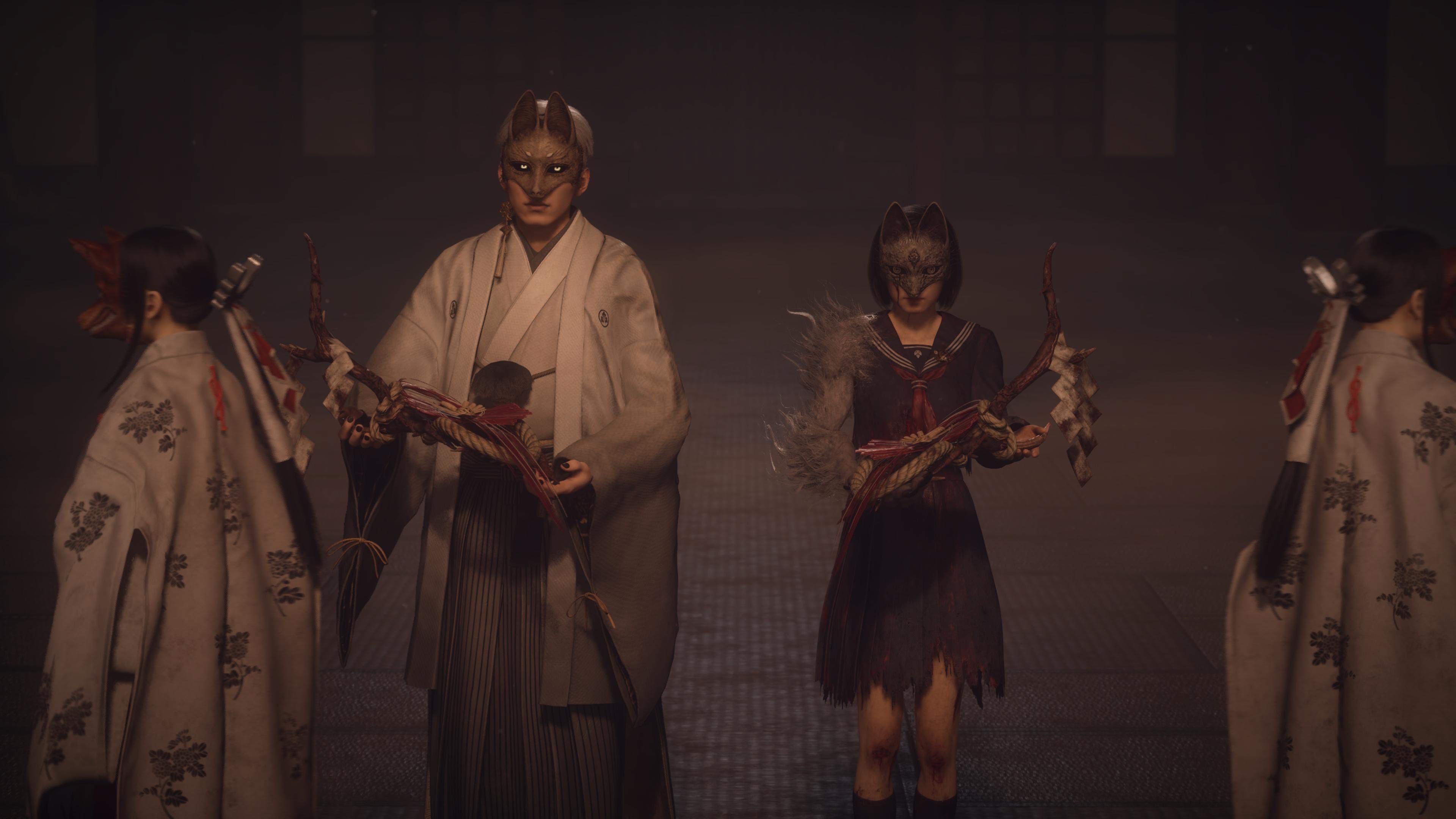
The Dark Shrine thus mirrors Hinako’s (as Shiromuku) own wedding ceremony, from the procession from the outside of the shrine, to the inner rites and rituals, to the wedding itself. As she surrenders herself, spiritually, by giving up her arm, allowing herself to be branded, to wearing a mask, so the self that was Shimizu Hinako ceremonally dies and becomes the bride of Fox Mask, the possession of the Tsuneki family and the faceless daughter in law who exists only to bringe the next family heir into the world.
Hinako’s journey reflects her lack of status, her unimportance, her status as a possession for her father to sell and the Tsuneki family to purchase. Her happinness, her feelings, her internal suffering, none of that matters and, via the three rituals, we get to understand the true suffering she endures and why her mind finally snapped at her own wedding ceremony.
That, right there, is the true horror of the rituals and of the game itself.